Publication Summary
Contribution of Beef to Key Nutrient Intakes and Nutrient Adequacy in Pregnant and Lactating Women: NHANES 2011–2018 Analysis
- Principle Investigator(s):
- Sanjiv Agarwal1, Victor L Fulgoni, III2
- Institution(s):
- 1 NutriScience, LLC, East Norriton, PA 19403, USA
- 2 Nutrition Impact, LLC, Battle Creek, MI 49014, USA
- Publication Date:
- Nutrients, 2024 Download Summary
STUDY HEADLINE
Pregnant and lactating women who consume beef have improved nutrient intake and adequacy for essential nutrients such as protein, calcium, iron, zinc, thiamin, riboflavin and niacin.
Background
Pregnancy and lactation are significant stages of life, and the importance of proper nutrition to support maternal and child health is well-established. During pregnancy, women undergo hormonal, metabolic and physiological changes, and throughout both pregnancy and lactation, energy and nutrient requirements -- especially for folate and iron -- are increased to support normal development and health of the fetus and infant. A higher intake of nutrient-dense foods is recommended to achieve these increased nutrient needs. However, very limited data are currently available on nutrient intakes and nutrient adequacy estimates in pregnant women, and almost no data are available for lactating women in the United States. Lean meats including beef, are a nutrient-dense food that provides essential nutrients for pregnant and lactating women and is noted as an example of a healthy food choice during pregnancy or lactation in the current Dietary Guidelines for Americans1, therefore; research is warranted to determine how beef contributes to nutrient adequacy in this population.
Objective
To assess beef intake (including fresh, ground, and processed beef) and its association with nutrient intake and adequacy among pregnant and lactating women using 24-h dietary recall data from the National Health and Nutrition Examination Survey, a comprehensive, nationwide health and nutrition survey database, (NHANES) 2011-2018.
Study Design
Data from NHANES 2011-2018 was analyzed for pregnant and lactating women to determine their reported beef intake. Usual intakes of foods were determined using the National Cancer Institute (NCI) method. Based on consumption data, nutrient adequacy was estimated by determining the percent of the population below the Estimated Average Requirement (%
Results
Key Findings for Beef Intake:
- About 67% of pregnant and lactating women reported consuming beef on either of the survey days; the mean intake of beef by these beef consumers was 49.3 g or 1.74 oz/day.
- The 67% of pregnant and lactating women reporting beef consumption on the day of the survey is higher than that previously reported for the general adult population using data from the same NHANES cycle. 51.2% of the general adult population (19-59 years old) has previously been reported to be consumers of beef (Lau et al., 2023).
- Mean per capita (beef and non-beef consumers) intake was 33.3 g or 1.17 oz/day.
- Average beef intake per capita, as well as among beef consumers, was below the daily Healthy Dietary Pattern modelled amount, 3.7 ounce equivalents of “Meats, Poultry, or Eggs” subgroup, in the 2020 Dietary Guidelines for Americans recommendations.
- About 59, 42, and 23% of pregnant and lactating women were consumers of fresh beef, ground beef and processed beef, respectively, with a mean intake of 50.0 g (1.8 oz), 38.6 g (1.4 oz) and 16.2 g (0.6 oz) per day, respectively.
- Mean per capita intake of fresh beef, ground beef and processed beef were 29.6 g (1.1 oz), 16.3 g (0.6 oz) and 3.67 g (0.1 oz), respectively.
- Fresh beef was the most consumed type of beef among pregnant and lactating women.
Key Findings for Nutrient Adequacy:
- Pregnant and lactating women generally have less than desired nutrient adequacy. The prevalence of nutrition inadequacy was high in pregnant and lactating women with over 50% of the population below the EAR for 6 nutrients, as shown below in Figure 1.
- Pregnant and lactating women who report eating beef have higher intakes and adequacy for certain nutrients, many of which are inherently available in beef or in foods commonly eaten with beef.
- From a reported 1.74 oz of beef per day, beef consumers had statistically higher usual intakes of numerous nutrients, compared to non-consumers, as shown below in Figure 2.
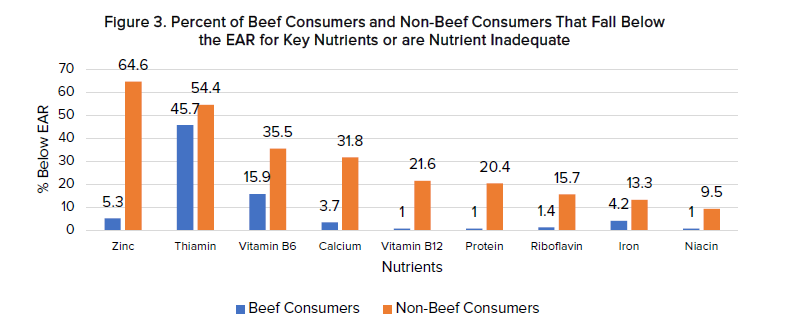
- A statistically higher proportion of beef consumers compared to non-beef consumers meet the nutrient recommendations for numerous key nutrients, consequently meeting nutrient adequacy on any given day, as shown below in Figure 3.
- While about 95% or more of pregnant and lactating women who eat beef have adequate intakes and meet nutrient recommendations of zinc, calcium, vitamin B12, protein, riboflavin, iron and niacin; many beef non-consumers are nutrient inadequate.
- In fact, 64.6%, 31.8%, 21.6%, 20.4%, 15.7%, 13.3% and 9.5%, non-beef consuming pregnant and lactating women have inadequate intakes of zinc, calcium, vitamin B12, protein, riboflavin, iron and niacin, respectively, as shown in Figure 3 above.
- Pregnant and lactating women who consumed beef were also less likely to be inadequate in thiamin and vitamin B6 when compared to non-beef consumers, but the difference between consumers and non-consumers was less drastic.
- In the United States, approximately 3.6 million births occur every year, with approximately 83.9% of new mothers breastfeeding.2,3
- To put these results into perspective, the authors highlighted how zinc intake increases after including beef in one’s diet. Zinc serves many roles during pregnancy including as a component of neurotransmitters, a structural component of proteins, and as a cofactor for many enzymes in both the immune and nervous system. Evidence supports the role of supplemental zinc in reducing risk of preterm birth. In the study, the authors note that 64.6% of pregnant and lactating women who do not consume beef fall below the EAR for zinc as compared to 5.29% in consumers of beef, which suggests that if the non-beef consumers are willing and able to incorporate 1.74 ounces of beef per day into their diet and consume food pattern similar to beef consumers in this analysis, it is estimated that an additional 830,000 pregnant and lactating women would no longer have inadequate intakes for zinc.
- Further, by multiplying the difference in beef consumers and non-beef consumers for nutrient adequacy with the population of non-consumers, it is estimated that roughly between 130,000 - 390,000 pregnant and lactating women non-beef consumers would no longer be below the EAR for protein, calcium, iron and vitamin B6, if they incorporated beef into their diet and consumed a food pattern similar to beef consumers in this analysis.
- These results suggest nutrient-dense beef may play a critical role in reducing the incidence of under-consumption of for key nutrients among pregnant and lactating women.
Figure 1. Percent of Pregnant and Lactating Women with Inadequate Intakes of Key Nutrients
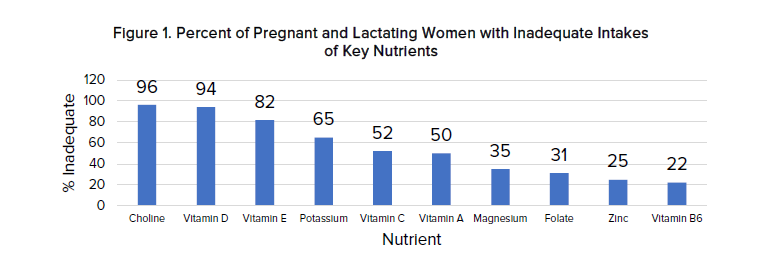
Figure 2. Percent Increase in Intake of Key Nutrients for Pregnant and Lactating Women Who Consumed Beef (About 1.74 oz/d)
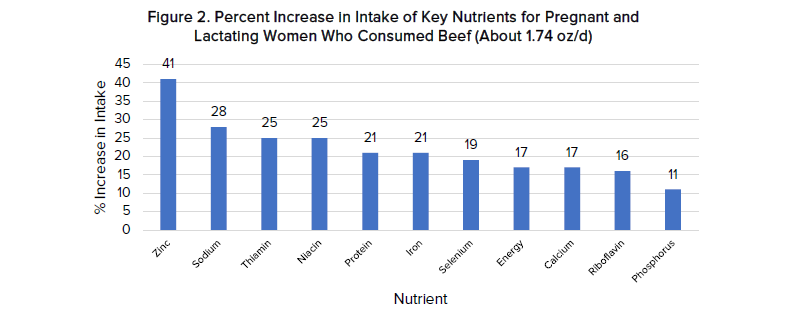
Figure 3. Percent of Beef Consumers and Non-Beef Consumers That Fall Below the EAR for Key Nutrients or are Nutrient Inadequate
References
- Meats as part of a healthy diet of nutrient-dense foods during pregnancy and lactation. Available at https://www.dietaryguidelines.gov/sites/default/files/2021-12/DGA_Pregnancy_FactSheet-508c.pdf
- Centers for Disease Control and Prevention. Births and Natality. Available at https://www.cdc.gov/nchs/fastats/births.htm
- Centers for Disease Control and Prevention. National immunization survey. Available at https://www.cdc.gov/breastfeeding/data/nis_data/index.htm
Citation
- Agarwal S, Fulgoni VL III. Contribution of Beef to Key Nutrient Intakes and Nutrient Adequacy in Pregnant and Lactating Women: NHANES 2011–2018 Analysis. Nutrients 2024; 16(7):981. https://doi.org/10.3390/nu16070981